Wood, tofu, bamboo or clay? How to choose a cat litter
The litters we stock, how they differ, and the RSPCA’s advice on setting up the tray.
The best cat litter is the one your cat will actually use. Start with an unscented litter about 3 to 4cm deep in a large, open tray, and make any change gradually. Clumping litters make daily scooping easier. Wood fibre, bamboo and tofu litters suit owners looking for a plant-based option, while bentonite clay is a traditional mineral clumping litter. Every litter we stock at For Pets Sake is clumping.
The cat litters on our shelves
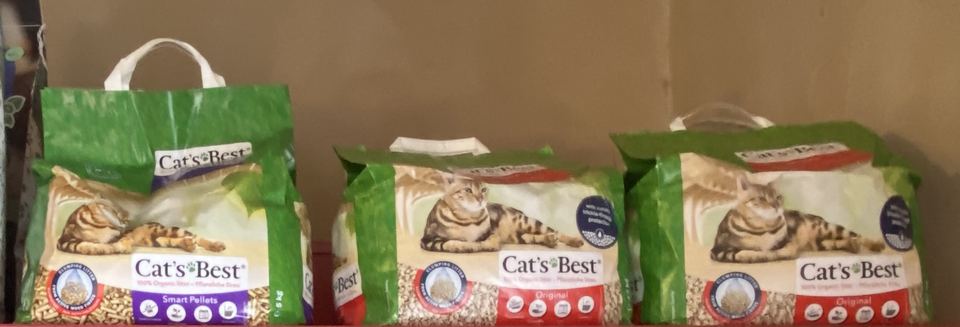
- Cats Best: organic wood fibres, in Original or Pellets.
- Wee Kitty: bamboo and activated charcoal.
- Poo Wee: tofu, or bentonite clay.
We also carry CSI Urine Enzyme Stain & Odour spray for accidents around the house. You’ll find the full list in the Cat Trays & Litter section of our range.
How the materials differ
Wood fibre
Wood fibre litter, like Cats Best, is made from plant fibres rather than clay. It comes in a fine Original style or as pellets, so if your cat is fussy about texture you have two to try.
Bamboo and activated charcoal
Wee Kitty combines bamboo with activated charcoal. Charcoal is often added to litter to help with odour, which can be handy in smaller homes or where the tray sits close to living areas.
Tofu
Tofu litter is made from soybean fibre. Poo Wee’s tofu option is a plant-based alternative to clay.
Bentonite clay
Bentonite is a natural clay that forms firm clumps. Many cats grew up on clay litter, so it can be the easiest option if your cat came from a home that used it.
Each brand has its own instructions for use and disposal, so check the bag, and ask us in store if you’d like to compare a few side by side.
Natural and plant-based cat litter
If you’re looking for a natural or organic-style kitty litter, the plant-based options on our shelves are Cats Best (organic wood fibres), Wee Kitty (bamboo with activated charcoal) and Poo Wee’s tofu litter, made from soybean fibre. Bentonite is a natural clay too, but it’s a mineral rather than a plant product. How you dispose of used litter depends on the brand, so follow the instructions on the bag.
Which cat litter suits a multi-cat household?
With more than one cat, the number of trays matters as much as the litter. The RSPCA recommends at least one tray per cat, plus one, in separate spots. A clumping litter helps, because you can lift out wet clumps every day and keep each tray fresh between full changes. All our litters have also been chosen for their ability to control urine odour. Cats can have strong preferences, so if you’re unsure, fill one tray with a different litter and see which one your cats choose.
Setting up the tray: the RSPCA’s checklist
The RSPCA’s guide to encouraging a cat to use a litter tray has some simple rules:
- More trays than cats. One cat needs at least two trays in physically separate spots. With more than one cat, provide at least one tray per cat, plus one.
- Go big and open. A good starting point is a large, open tray at least one and a half times the length of your cat.
- Enough litter to dig. About 3 to 4cm of an unscented litter.
- Quiet, private, easy to reach. Keep trays away from food and water, and avoid moving them around, which can confuse and stress your cat.
- Keep it clean. Remove faeces and urine every day, and empty and clean the trays regularly.
Switching to a new litter
The RSPCA notes that cats can have strong individual preferences for litter types and trays. Because you should already have at least two trays, an easy way to test a new litter is to put it in one tray and keep the familiar litter in the other, then see which one your cat chooses before switching over completely.
If your cat starts toileting outside the tray, or the problem keeps happening, the RSPCA recommends seeing your vet to rule out a medical cause. We've also found that this can be caused by changes in the household that can be helped by using our natural calming products like Pet Relax Spray.
Pick up litter in Angaston
Cats Best, Wee Kitty and Poo Wee are on the shelves at our Angaston pet shop, 24 Murray Street, alongside cat scratchers and towers from Kazoo, Allpet and Cattitude. If you’d like a particular size or style put aside, call 0468 378 344 or send an order enquiry.
Common questions
What is the best cat litter?
The one your cat will use consistently. The RSPCA suggests starting with about 3 to 4cm of an unscented litter in a large, open tray. We stock wood fibre (Cats Best), bamboo and charcoal (Wee Kitty), and tofu or bentonite clay (Poo Wee), all clumping.
Is clumping cat litter better?
Clumping litter makes it easy to lift out wet litter every day, which fits the RSPCA advice to remove faeces and urine daily. Every litter we stock is clumping.
How many litter trays do I need?
The RSPCA recommends at least two trays for one cat, in separate locations, and at least one tray per cat plus one in multi-cat homes.
How do I switch my cat to a new litter?
Put the new litter in one tray and keep the familiar litter in another, then watch which your cat uses before changing over completely. Cats can have strong litter preferences.
Which cat litter suits a multi-cat household best?
A clumping litter you can scoop every day, in enough trays: the RSPCA recommends at least one tray per cat, plus one, in separate spots. A litter with activated charcoal, like Wee Kitty, is an option if odour is a concern. Watch which litter your cats choose.
What are the main types of cat litter?
Plant-based litters such as wood fibre, bamboo and tofu, and mineral litters such as bentonite clay. We stock Cats Best wood fibre, Wee Kitty bamboo and charcoal, and Poo Wee tofu or bentonite clay, all clumping.
Is there a natural cat litter?
Yes. Wood fibre (Cats Best), bamboo (Wee Kitty) and tofu (Poo Wee) litters are made from plant materials rather than clay. Check each bag for how to dispose of the used litter.